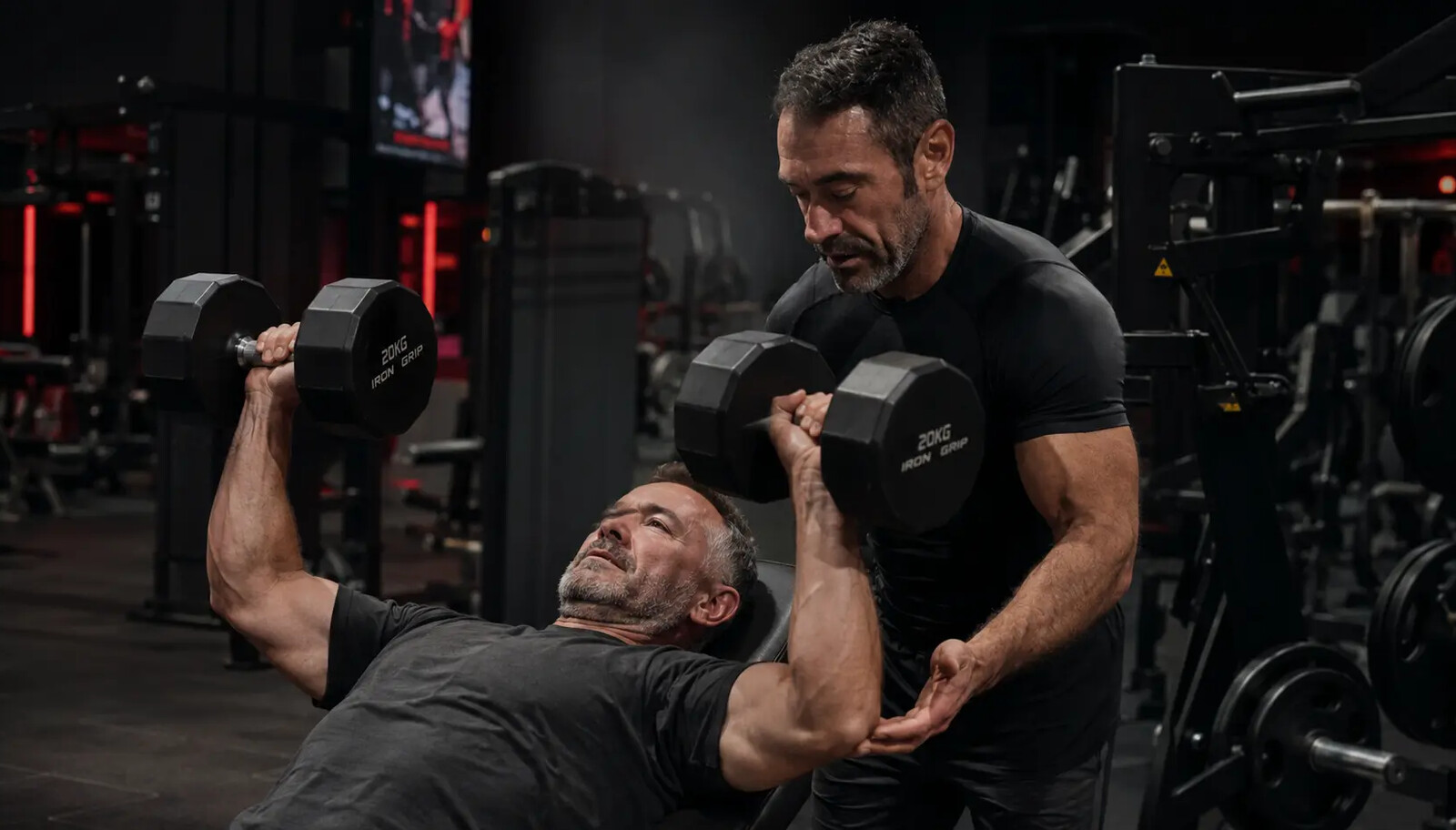
Testosterone replacement therapy has become one of the most talked-about subjects in men’s health, particularly among men in their 40s and 50s who feel that their energy, strength, recovery or sex drive are not what they used to be. It is also a subject surrounded by a lot of noise. Social media can make TRT sound like either a miracle cure for ageing or something inherently dangerous, while some private clinics advertise it in a way that can make almost any tired middle-aged man wonder whether he is deficient.
The reality is more nuanced.
For men with genuine testosterone deficiency, TRT can be an effective medical treatment. It can improve symptoms associated with low testosterone and, in the right circumstances, make a meaningful difference to quality of life. But it is not a shortcut around poor sleep, inactivity, excess body fat, bad nutrition or inconsistent training. It is also not something that should be started simply because you want to feel younger or make faster progress in the gym.
The first question should always be whether there is actually a medical problem to treat.
Testosterone levels naturally vary between individuals and can also fluctuate depending on the time of day, sleep, illness, body weight and other factors. A single blood result does not automatically mean you need treatment. A proper diagnosis usually considers both symptoms and blood testing, and in many cases testing will need to be repeated before a clinician decides that testosterone replacement is appropriate.
That matters because many of the symptoms people associate with low testosterone are not specific to low testosterone at all. Fatigue, low motivation, reduced libido, poorer training performance and mood changes can also be caused by poor sleep, stress, depression, obesity, alcohol, sleep apnoea or other medical issues. If you are exhausted because you are sleeping five hours a night and working twelve-hour days, testosterone may not be the main problem.
This is why TRT should be viewed first and foremost as a medical treatment for testosterone deficiency, not as a general performance-enhancing strategy.
For a man who is genuinely deficient, however, correcting that deficiency can be important. Testosterone plays a role in sexual function, muscle, bone and general wellbeing. If low testosterone has contributed to reduced muscle mass, lower strength, poor energy or loss of libido, bringing levels back into a normal physiological range may help improve those symptoms.
From a training point of view, this can be significant, but not always in the way people imagine.
Some men expect TRT to suddenly transform their physique or send their strength through the roof. In reality, one of the biggest benefits may simply be that they feel capable of training properly again. If your energy improves, your mood is better and you are recovering more effectively, you may become more consistent in the gym. That consistency can then produce the progress you were struggling to achieve before.
TRT does not lift the weights for you. It does not correct poor technique, write your programme or make up for missing half your sessions. It may improve the environment in which you are training, but the training still has to be there.
This distinction is especially important because testosterone itself is an anabolic hormone. Increasing testosterone above normal physiological levels can clearly influence muscle growth and performance, but that is not the same thing as medically supervised replacement therapy. Proper TRT is intended to restore testosterone in a deficient man to an appropriate range. Using large doses specifically to increase muscle mass or performance is a different thing entirely, even if someone casually refers to it as “TRT”.
That is one reason men need to be cautious about what they hear in gyms and online. Two people can both say they are “on TRT” while taking very different amounts and achieving very different blood levels. The label alone does not tell you much.
If TRT is medically appropriate for you, it can also have important implications for body composition. Low testosterone can be associated with reduced muscle mass and increased fat mass, so correcting genuine deficiency may help improve some of those changes over time. But TRT is not a fat-loss treatment. If your calorie intake is too high, your activity is low and your diet is poor, testosterone is not going to override basic physiology.
That is why I would still place the same emphasis on nutrition, resistance training and general activity whether someone is on TRT or not. If your goal is to become leaner while maintaining muscle, you still need an appropriate calorie intake, adequate protein and a proper strength-training programme. TRT may help if low testosterone was genuinely holding you back, but it does not remove the need for those fundamentals.
The same applies to strength.
A man who has been deficient for some time may notice improvements in training once treatment begins, particularly if energy and recovery improve. But strength is not produced by hormones alone. Strength is also a result of skill, technique, neural adaptation, tendon tolerance and repeated practice. You still have to train the movements, build volume sensibly and progress over time.
In fact, feeling better can sometimes create a different problem. A man starts TRT, his energy improves, he becomes enthusiastic about training again and suddenly doubles the amount of work he is doing. His muscles may feel capable of handling more, but his joints and connective tissues still need time to adapt. If you have spent years training inconsistently, you should not assume that feeling better means your body is suddenly ready for six hard sessions a week.
Progressive training still means progressive.
TRT also needs to be monitored properly. It is not something that should simply be prescribed and forgotten about. Testosterone treatment can affect blood markers, including haematocrit, and clinicians may also monitor other aspects of health depending on your age, history and circumstances. The purpose of monitoring is not simply to check whether your testosterone number has gone up. It is to make sure treatment is doing what it is supposed to do without creating unnecessary problems.
This is one of the clearest differences between proper medical treatment and simply obtaining testosterone yourself.
If someone is willing to supply testosterone but has little interest in your symptoms, blood results, fertility plans, side effects or follow-up testing, that should raise questions.
Fertility is particularly important and often overlooked. Taking testosterone from outside the body can suppress the hormonal signals involved in natural testosterone and sperm production. For men who may want children in the future, this needs to be discussed before treatment begins, not after. Starting TRT without understanding that possibility can create a problem you did not realise you were signing up for.
So where should you actually get TRT if you think you need it?
In the UK, the most sensible starting point is usually your GP. Explain the symptoms you are experiencing rather than simply asking for testosterone. If your doctor thinks testosterone deficiency is possible, they can arrange appropriate blood tests and investigate further. If the results and symptoms support a diagnosis, you may then be referred or treated appropriately.
Private treatment is also available, and there is nothing inherently wrong with using a private clinic. The important thing is that it should still feel like healthcare rather than a sales process. A good clinic should want to understand why your testosterone is low, whether there may be another cause, what your symptoms are, whether treatment is appropriate and how you will be monitored afterwards.
You should be cautious if the whole process appears designed to get you onto testosterone as quickly as possible.
TRT should also be used as replacement therapy, not as an excuse to chase the highest possible testosterone number. The aim is not to win a competition with somebody online whose blood level is higher than yours. The aim is to treat symptoms of genuine deficiency and bring testosterone into an appropriate range under medical supervision.
More is not automatically better.
Once testosterone is pushed well beyond normal physiological levels, you are no longer simply replacing what is missing. You are moving towards enhancement, and that is a different conversation with a different risk profile.
One of the most useful things a man can do before starting TRT is to look at the rest of his lifestyle honestly. That does not mean every case of low testosterone can be fixed with sleep and weight loss. Some men genuinely need medical treatment. But if you are significantly overweight, sleeping badly, drinking heavily, barely moving and constantly stressed, those things deserve attention whether you end up on TRT or not.
Improving your lifestyle can make you feel better in its own right, and in some men it may also improve the factors contributing to low testosterone. More importantly, it improves your health regardless of what your blood test eventually shows.
This is where I think TRT is best viewed in context.
If you genuinely need it, use it as part of a bigger health plan. Let it help correct the problem it was prescribed for, then continue doing the things that actually make you stronger, fitter and healthier. Train consistently. Progress your lifting sensibly. Keep some cardiovascular exercise in your week. Stay active outside the gym. Eat appropriately for your goal. Get enough protein. Manage your body weight. Sleep properly.
TRT can be a useful tool, but it should not become the centre of your entire fitness identity.
For the right man, it can make a real difference. It may improve symptoms, restore aspects of physical function and make training feel worthwhile again. But not every tired man over 40 needs testosterone, and not every training problem is hormonal.
If you think something is wrong, get properly assessed. If TRT is appropriate, use it under proper medical supervision and keep up with the monitoring that comes with it.
Then focus on the part you can control.
Train well, look after your health and build a body that is still capable of doing what you want it to do years from now.
That is a far better goal than simply chasing a bigger number on a blood test.
Need Help With Your Training?
If you are over 40, have started TRT, are considering it, or simply feel that your strength and recovery are not what they used to be, your training may need to change with you.
At Wolverine Personal Training, the aim is not to throw more exercises at the problem. It is to build a programme around your current fitness, your goals, your experience and what you can realistically recover from.
TRT may be part of your medical care, but the training still needs to make sense.
If you are ready to become stronger, fitter and more capable, get in touch with Wolverine Personal Training and let’s build a programme that works for you.
Written by
Wolverine PT
Coaching adults who want to build muscle, get stronger and stay capable while balancing work, family and normal life.