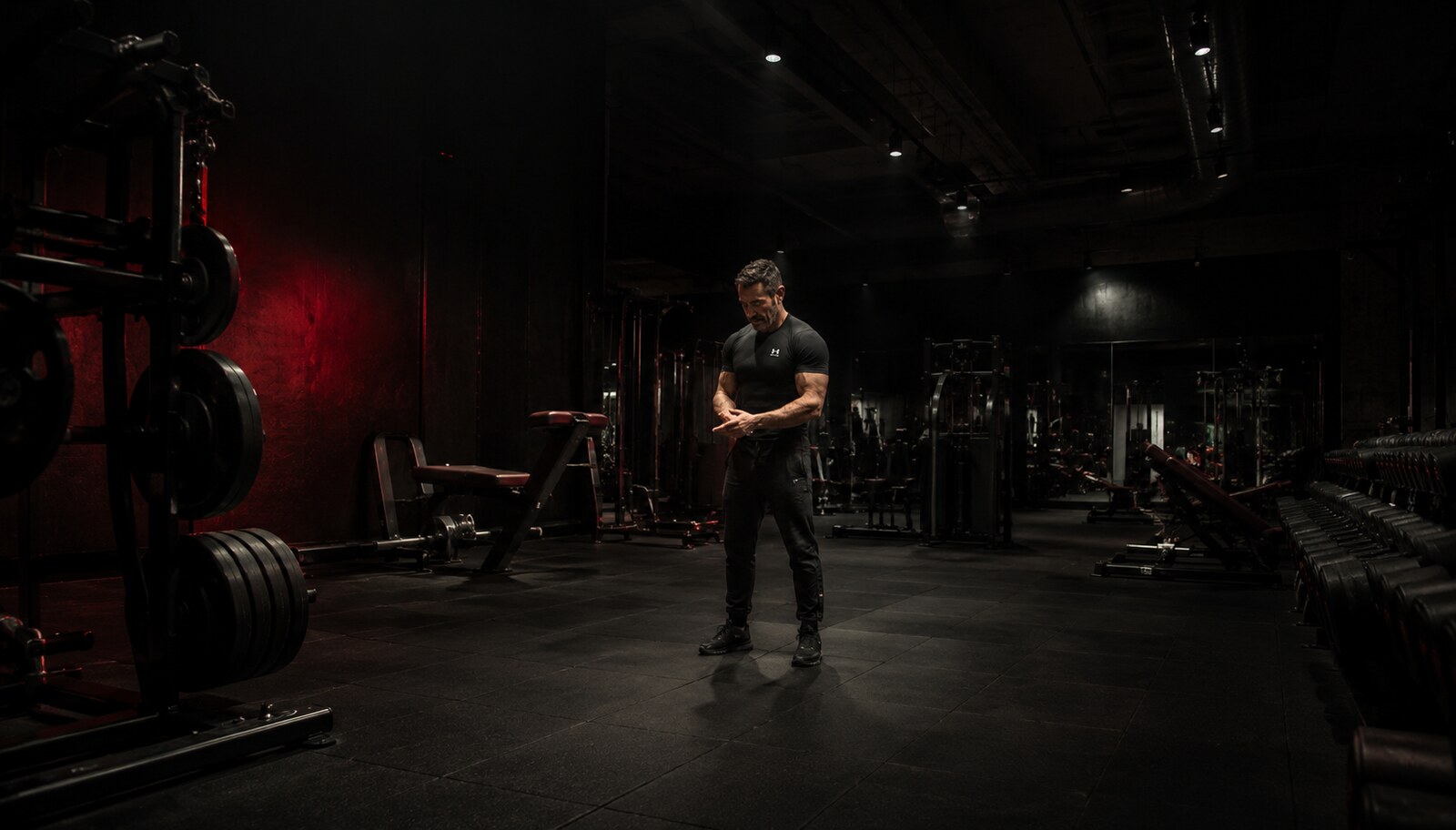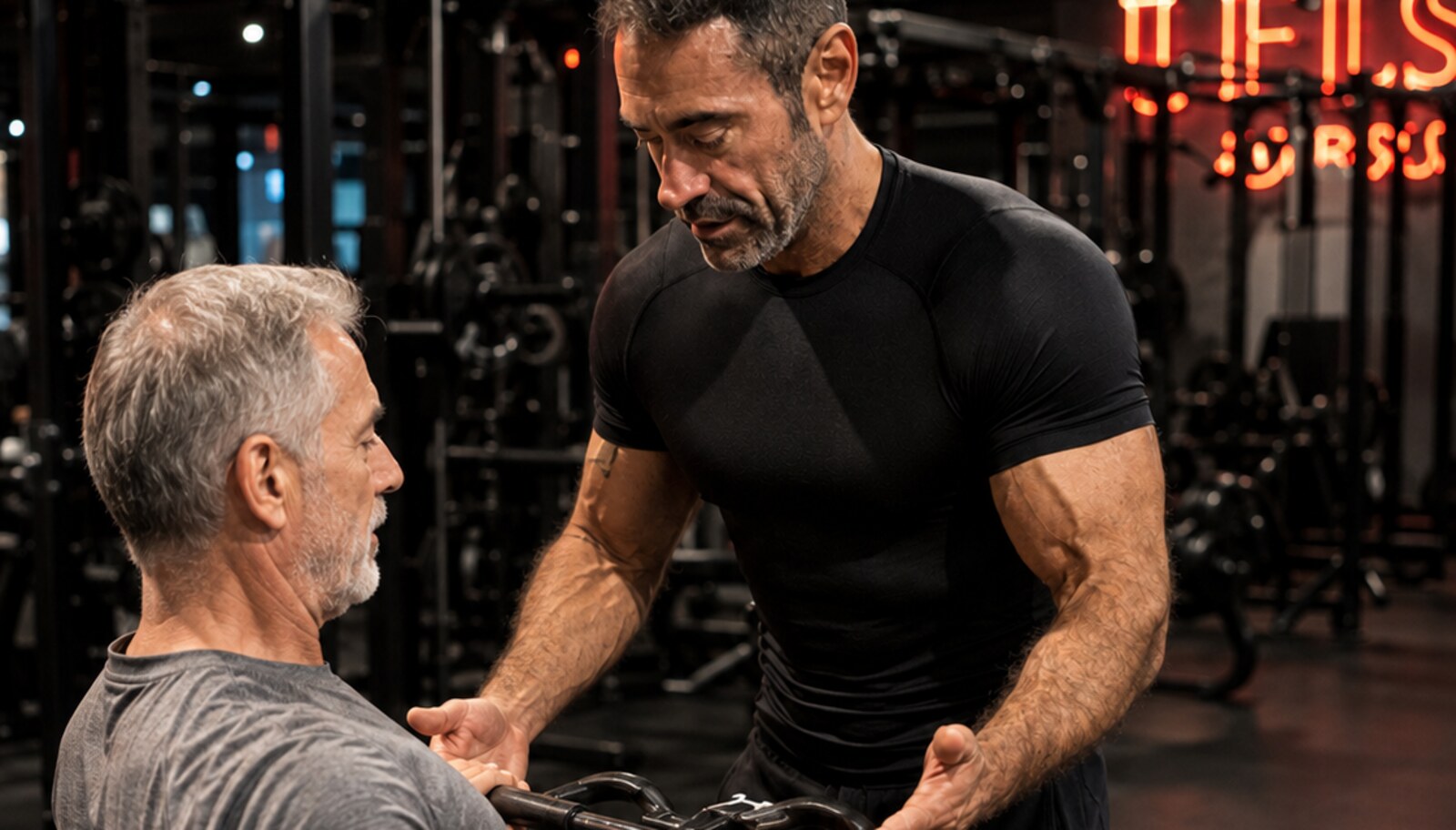
There comes a point in life where muscle stops being something we should think about purely in terms of appearance.
By the time we reach our 40s and 50s, maintaining muscle and strength becomes increasingly important for how well we move, how independent we remain and how resilient we are as we age. The science around this is now very strong. Higher levels of muscular strength are consistently associated with better long-term health outcomes, while lower strength and lower muscle mass are linked with frailty, poorer physical function and a greater risk of mortality.
This does not mean that having bigger muscles automatically makes you live longer. The relationship is more nuanced than that. Strength and muscle are markers of physical capacity, health and resilience, and resistance training influences many of the systems that help us remain capable as we age. The important message is that preserving muscle and strength is not cosmetic. It is a fundamental part of healthy ageing.
What actually happens to muscle as we get older?
Muscle mass and strength do not remain constant throughout life. They generally increase through childhood and early adulthood, reach their highest levels in young adulthood and are then broadly maintained through midlife before gradually declining with age. The European Working Group on Sarcopenia in Older People describes sarcopenia as a progressive muscle disease characterised particularly by low muscle strength, with reduced muscle quantity and physical performance contributing to diagnosis and severity.
One of the important changes in modern thinking around ageing is that strength is now considered particularly important. The EWGSOP2 consensus places low muscle strength at the centre of sarcopenia because strength is one of the most reliable indicators of muscle function and future physical capability.
This matters because strength is what allows us to translate muscle into real-world ability. Standing up from a chair, carrying shopping, climbing stairs, getting up from the floor, lifting luggage, gardening and simply maintaining balance all require force production.
Losing some muscle with age may be normal. Allowing that decline to accelerate through inactivity is not inevitable.
Strength is closely associated with longevity
Some of the strongest evidence comes from studies looking at measures such as handgrip strength.
A large systematic review and meta-analysis involving almost two million people found that higher muscular strength was associated with a substantially lower risk of all-cause mortality. The association was seen in both upper- and lower-body strength measures and remained present across different ages.
Another meta-analysis involving more than three million participants found a strong inverse relationship between grip strength and all-cause mortality: generally, lower grip strength was associated with higher mortality risk.
In older adults specifically, a meta-analysis of 30 studies involving nearly 195,000 people found that higher handgrip strength was associated with lower all-cause mortality.
Again, this does not prove that increasing grip strength itself prevents death. These are largely observational relationships, and stronger people may differ from weaker people in many other ways. What the evidence does demonstrate is that muscular strength is an extremely useful marker of physical health and resilience.
That is one reason why strength testing is increasingly viewed as a meaningful part of assessing health as we age.
Resistance training is associated with lower mortality too
It is not only strength itself that appears important. Resistance training is also associated with positive long-term outcomes.
A systematic review and meta-analysis published in the American Journal of Preventive Medicine found that, compared with doing no resistance training, participation in resistance training was associated with approximately a 15% lower risk of all-cause mortality. It was also associated with lower cardiovascular and cancer mortality in the studies analysed.
The researchers also found that more was not necessarily better. The relationship was not linear, and relatively modest amounts of resistance training were associated with meaningful benefit.
That is important because one of the most common misconceptions about strength training is that it requires spending five or six days a week in the gym.
It does not.
For most adults, particularly people with jobs, families and other responsibilities, two or three well-structured strength sessions each week can provide an enormous amount of benefit when performed consistently.
The World Health Organization recommends that adults perform muscle-strengthening activities involving all major muscle groups on at least two days per week. For older adults, strength and balance work become particularly important for preserving function and reducing fall risk.
Muscle gives you physical reserve
One of the reasons maintaining muscle becomes so important later in life is what I think of as physical reserve.
Imagine two people entering their 70s.
One has trained consistently for decades, maintained reasonable amounts of muscle and can comfortably squat, push, pull and carry loads.
The other has gradually become less active, has lost a significant amount of strength and already finds stairs and getting out of a chair challenging.
Now imagine that both experience an illness, an operation or several weeks of inactivity.
Both may lose strength and muscle during that period, but the first person begins from a much higher baseline.
That reserve matters.
The more strength and capability we have before something goes wrong, the more capacity we potentially have to absorb a period of inactivity without crossing the threshold into dependence.
This is one reason maintaining muscle should not simply be thought of as preparing for your next holiday or changing how you look in a T-shirt. It is building a reserve for later life.
Muscle, balance and reducing frailty
Falls are one of the major threats to independence as people get older.
Preventing falls is not simply a question of having good balance. You also need enough strength to correct your position when balance is disturbed.
You need sufficient leg strength to control your body when stepping down from a curb. You need enough hip and trunk strength to stabilise yourself when you stumble. And you need adequate strength to get back up if you do fall.
This is why strength and balance work are specifically included in physical activity recommendations for older adults. The WHO recommends multicomponent activity incorporating functional balance and strength training to help maintain physical capacity and reduce the risk of falls.
The goal is not necessarily to lift the heaviest weights possible.
The goal is to progressively develop enough strength that everyday tasks remain comfortably below your maximum capacity.
If standing from a chair represents 80% of your available strength, everyday life becomes difficult.
If the same movement represents 20% of your available strength, it is barely noticeable.
That difference is what physical capability looks like.
Resistance training works even later in life
Another misconception is that once somebody reaches their 60s or 70s, it is too late to build meaningful strength.
The evidence does not support that.
A 2024 meta-analysis of 22 randomised controlled trials involving older adults with sarcopenia found that resistance training produced substantial improvements in measures including grip strength and knee-extension strength, while also producing smaller but significant improvements in muscle mass.
A separate systematic review and meta-analysis in adults aged 60 and above found that resistance training can improve muscular strength and functional exercise capacity, alongside benefits in broader measures of well-being.
The body continues to respond to resistance training well into later life.
The rate of progress may change, recovery requirements may change and exercise selection may need to become more intelligent, but adaptation does not simply stop because somebody reaches a particular birthday.
Why training should change as you get older
This does not mean a 55-year-old should necessarily train exactly as they did at 25.
The fundamentals remain remarkably similar: progressive overload, sufficient training intensity, good exercise technique, adequate protein and recovery.
What often changes is how those principles are applied.
Recovery may require more consideration. Old injuries may influence exercise selection. Sleep and stress may play a larger role. Training volume may need tighter management, and repeatedly pushing every set to complete failure may become less productive.
The solution is not to stop training hard.
It is to train more intelligently.
For many people in their 40s and 50s, two or three well-structured resistance sessions per week are far more valuable than an inconsistent cycle of doing too much, becoming exhausted or injured, stopping for several weeks and then starting again.
Consistency wins.
The importance of progressive overload
Simply attending the gym is not enough.
To maintain and build strength, the body needs a reason to adapt. This is where progressive overload comes in.
Progressive overload means gradually increasing the demands placed upon the body over time. That might involve increasing the weight lifted, performing more repetitions with the same weight, improving technique, increasing range of motion or gradually increasing training volume.
The progression does not need to happen every session.
What matters is that, over months and years, your training does not remain permanently at exactly the same level.
The objective is to gradually increase your capacity.
When programmed properly, resistance training should make everyday life feel easier because your maximum capability is increasing.
Nutrition still matters
Training provides the stimulus, but nutrition provides part of the environment in which adaptation occurs.
As we get older, adequate protein intake becomes particularly important for maintaining muscle mass. This does not mean everybody needs to live on protein shakes or follow an extreme bodybuilding diet.
It means that protein should be deliberately included across the day alongside sufficient overall nutrition to support training and recovery.
For somebody trying to lose body fat after 50, this becomes especially important.
The goal should not simply be to make body weight decrease as quickly as possible. Losing weight while doing little resistance training and consuming inadequate protein can increase the risk of losing valuable lean tissue alongside body fat.
A better objective is to improve body composition: reduce excess body fat while maintaining as much muscle and strength as possible.
That produces a very different long-term outcome.
Start before you think you need to
You do not need to wait until strength has already declined significantly before doing something about it.
In many ways, your 40s and 50s are an ideal time to become serious about resistance training.
You are not training simply for how you want to look next summer.
You are training for how you want to move at 60.
You are training for whether you can carry your own luggage at 70.
You are training for whether you can get yourself off the floor at 75.
You are training for the ability to remain independent for as long as possible.
None of us can guarantee how long we will live, and resistance training cannot eliminate ageing, illness or disease.
But we can influence how physically prepared we are for later life.
The evidence consistently tells us that strength, muscle mass and physical capability matter.
That makes resistance training one of the most valuable investments we can make in our future health.
At Wolverine Personal Training, the aim is not simply to make people tired for an hour.
It is to build stronger, more capable bodies through structured resistance training, progressive overload, sensible nutrition and a programme that can actually be maintained around real life.
Because after 50, muscle is no longer just about aesthetics.
It is about what you are still able to do with your life.
Wolverine Personal Training
Build muscle. Lose fat. Get stronger. Stay capable.
wolverinept.co.uk
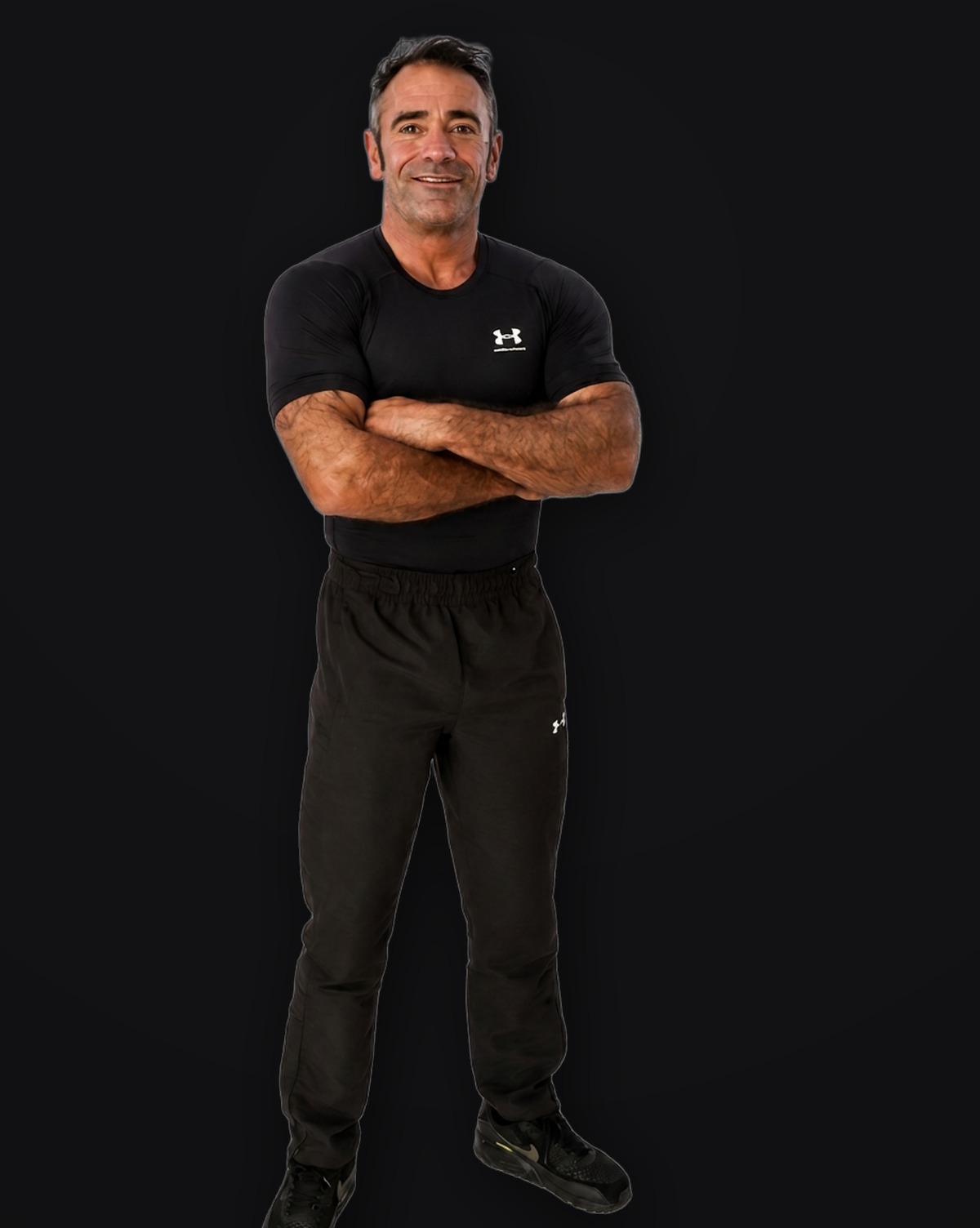
Written by
Wolverine PT
Coaching adults who want to build muscle, get stronger and stay capable while balancing work, family and normal life.