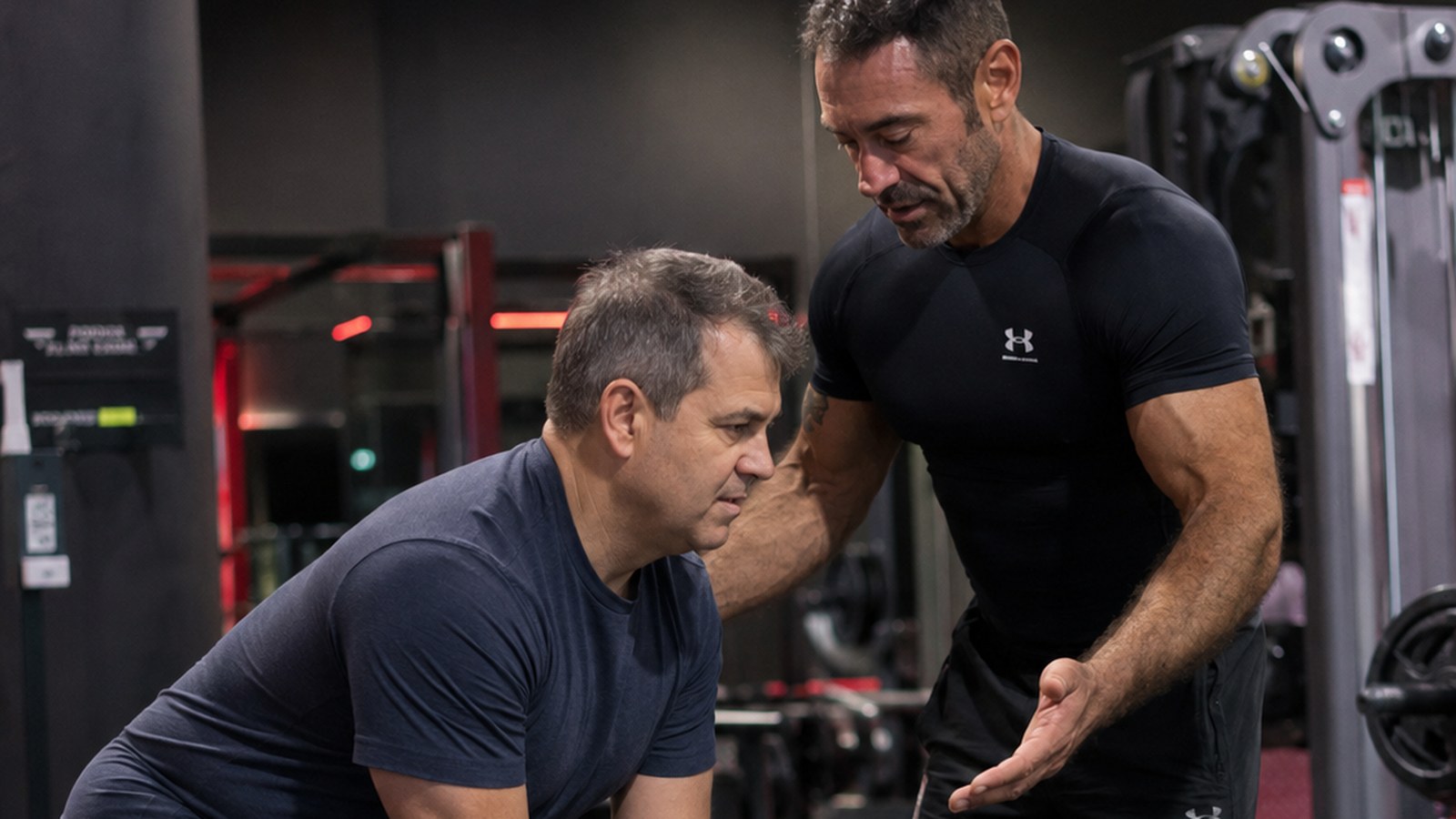
There is a persistent idea that once you reach 40, building significant muscle becomes extremely difficult or even impossible.
That's simply not true.
Muscle remains highly adaptable throughout adulthood. Resistance training can increase muscle size and strength in older adults, and people who begin structured training later in life can make substantial improvements.
However, building muscle at 40 isn't necessarily about doing more.
It's about doing the right things consistently, while taking account of recovery, nutrition, training history, lifestyle and the physiological changes that occur with ageing.
That distinction is at the heart of effective training after 40.
Why does building muscle become more challenging?
Ageing is associated with a gradual reduction in muscle mass and strength, but the process is complex and highly individual.
Several factors can contribute:
- Reduced physical activity
- Changes in muscle protein turnover
- Reduced exposure to resistance training
- Changes in appetite and diet
- Accumulated injuries
- Reduced recovery capacity
- Sleep disruption
- Changes in body composition
- Hormonal changes
- Long periods of inactivity
There is also a phenomenon often referred to as anabolic resistance.
In simple terms, older muscle may require a somewhat stronger nutritional or exercise stimulus to produce the same muscle-building response seen in younger people.
That doesn't mean older muscle cannot grow.
It means the stimulus needs to be appropriate.
Resistance training is still the foundation
If your goal is to build muscle after 40, resistance training should be at the centre of your programme.
Your muscles adapt to the demands you place on them.
When resistance training creates sufficient mechanical tension and other relevant stimuli, the body responds by adapting the muscle tissue and nervous system.
Over time, this can produce:
More muscle → more strength → greater physical capability.
The important word is progressive.
Repeating exactly the same workout with exactly the same loads and repetitions indefinitely isn't likely to maximise adaptation.
You need some form of progressive challenge.
Progressive overload doesn't mean lifting heavier every session
Progressive overload is often misunderstood.
It doesn't necessarily mean adding weight every time you enter the gym.
Progression can involve:
- Increasing load
- Increasing repetitions
- Increasing sets
- Improving technique
- Increasing range of motion
- Improving control
- Increasing training density
- Performing the same workload with less perceived effort
For example, if you perform 3 sets of 8 repetitions with 80 kg this week and eventually manage 3 sets of 10 with the same weight and good technique, you've progressed.
You don't necessarily need to add weight every session.
This is particularly useful for adults with busy lives because training doesn't have to become a constant battle to lift heavier weights.
How hard should you train?
One of the most important variables for hypertrophy is training effort.
You don't necessarily need to take every set to absolute muscular failure.
For many exercises, working reasonably close to failure provides a strong stimulus while allowing you to manage fatigue.
A useful way of thinking about this is repetitions in reserve, or RIR.
- 3 RIR
- You finish a set believing you could have performed approximately three more good repetitions.
- 1 RIR
- You could only have performed one more.
- 0 RIR
- You genuinely cannot complete another repetition with appropriate technique.
Most hypertrophy training doesn't need every set to be 0 RIR.
In fact, constantly taking large numbers of exercises to absolute failure can create substantial fatigue without necessarily providing enough additional benefit to justify it.
A more intelligent approach is often to train hard while controlling fatigue.
How many sets do you need?
There isn't one magic number.
Research examining resistance-training volume generally supports a relationship between training volume and muscle growth, but the relationship isn't unlimited.
More isn't automatically better.
Your ideal training volume depends on:
- Training experience
- Exercise selection
- Muscle group
- Recovery
- Training frequency
- Nutrition
- Sleep
- Stress
- Age
- Individual response
A highly experienced lifter may require and tolerate more training than someone returning to the gym after 15 years.
This is why prescribing exactly “20 sets per muscle per week” to everyone isn't particularly intelligent.
The better question is:
How much productive training can you recover from and progressively improve with?
Training frequency
For many people, training each major muscle group more than once per week can be a practical way of distributing training volume.
For example, rather than attempting to perform all of your weekly chest work in one enormous session, it can be distributed across two sessions.
This can improve workout quality and make it easier to manage fatigue.
But again, there is no universal perfect frequency.
Someone who can train four times per week has different options from someone who can realistically train twice.
The programme needs to fit the person.
What about compound exercises?
Squats, presses, rows, deadlifts, pull-ups and other multi-joint movements can be excellent exercises for building muscle.
But you don't have to build your entire programme around heavy compound lifts.
Exercise selection should consider:
- Target muscle
- Stability
- Range of motion
- Technique
- Joint tolerance
- Injury history
- Individual preference
- Ability to progressively overload
For one person, a barbell squat might be an excellent choice.
For another, a leg press or hack squat may provide a better stimulus-to-fatigue relationship.
The best exercise isn't necessarily the one that looks most impressive.
It's the one that allows you to train the intended muscle effectively and progressively.
Don't ignore isolation exercises
There's sometimes an unnecessary divide between “functional” compound exercises and “unnecessary” isolation exercises.
If your goal is hypertrophy, isolation exercises can be extremely useful.
Exercises such as:
- Lateral raises
- Leg curls
- Leg extensions
- Biceps curls
- Triceps extensions
- Calf raises
can allow you to apply meaningful training stimulus to specific muscles without generating the same whole-body fatigue as some compound movements.
For a busy 40-year-old, that can be valuable.
You want to maximise the amount of productive work you can recover from.
Protein becomes particularly important
Nutrition is the other half of the equation.
Muscle tissue is continually being broken down and rebuilt.
Resistance training provides an important stimulus for muscle protein synthesis, while dietary protein provides the amino acids required to support tissue maintenance and growth.
For people trying to build or preserve muscle, ensuring adequate daily protein intake is therefore important.
A commonly supported range for resistance-trained individuals is approximately:
1.6–2.2 g of protein per kilogram of body weight per day
although individual requirements can vary.
For someone weighing 80 kg, that would represent approximately:
128–176 g of protein per day.
More isn't necessarily better.
Once adequate protein intake is achieved, simply continuing to increase protein isn't guaranteed to produce additional muscle growth.
Total energy intake, carbohydrate availability, dietary quality and overall adherence also matter.
Don't be afraid of carbohydrates
Carbohydrates are sometimes treated as the enemy when people are trying to improve their physique.
For resistance training, that's unnecessarily simplistic.
Carbohydrates can contribute to:
- Training performance
- Muscle glycogen
- Recovery
- High-intensity exercise capacity
If you're training hard several times per week, adequate carbohydrate intake can make it easier to perform quality sessions.
If you're trying to build muscle, consistently eating too little energy can also make the process more difficult.
Do you need a calorie surplus?
Not necessarily.
Muscle gain is generally easier when sufficient energy and nutrients are available, particularly in experienced lifters.
A modest calorie surplus can therefore be useful when maximising muscle growth is the primary goal.
However, the situation is different for:
- Beginners
- People returning after a long training break
- People carrying significant body fat
- People with relatively high energy availability
These individuals may be able to gain muscle while maintaining or even reducing body fat.
This is sometimes referred to as body recomposition.
The key is not to assume that everyone needs to “bulk”.
What happens to testosterone after 40?
This is an area where fitness marketing often becomes misleading.
Testosterone does tend to decline with age in men, but the change is gradual and highly variable.
Low testosterone can be associated with symptoms including reduced libido, reduced energy, changes in body composition and reduced muscle mass, but these symptoms are not specific to testosterone deficiency.
Poor sleep, obesity, stress, illness and other factors can also affect testosterone levels and how someone feels.
Therefore, assuming that every man over 40 needs testosterone replacement is not scientifically justified.
If someone has symptoms that may indicate testosterone deficiency, this is a matter for appropriate medical assessment and blood testing.
What about TRT?
Some men are prescribed testosterone replacement therapy by a healthcare professional.
If a client is receiving medically supervised TRT, that becomes part of their individual context when designing training and lifestyle strategies.
However, TRT isn't a substitute for:
- Progressive resistance training
- Adequate nutrition
- Sleep
- Recovery
- Cardiovascular fitness
- Good lifestyle habits
And a personal trainer should never diagnose testosterone deficiency or advise a client to start, stop or change prescribed hormone treatment.
That belongs with the client's healthcare professional.
What about growth hormone and other hormones?
Growth hormone and IGF-1 are involved in growth and tissue metabolism, and their patterns also change with age.
However, this doesn't mean that artificially manipulating these hormones is necessary for successful muscle building.
The fundamentals remain considerably more important:
Progressive resistance training + sufficient protein + adequate energy + recovery + consistency.
There is a tendency in the fitness industry to look for a hormonal shortcut when the basics aren't being executed consistently.
The basics are still the basics.
Sleep may be one of your biggest limiting factors
If you're training hard but sleeping badly, you may be leaving progress on the table.
Sleep plays an important role in:
- Recovery
- Appetite regulation
- Cognitive function
- Exercise performance
- General health
Adults differ in their sleep requirements, but consistently inadequate sleep can make training and nutrition harder to manage.
This is particularly relevant for people over 40 because work, children, stress and other responsibilities can all interfere with sleep.
Sometimes the answer isn't another supplement.
It is getting to bed earlier.
Recovery doesn't mean doing nothing
Recovery is not the opposite of training.
It's part of training.
A good programme manages the balance between:
Stimulus → fatigue → recovery → adaptation
If training stress continually exceeds your ability to recover, performance can stagnate.
Signs that your programme may need adjustment can include:
- Persistent performance decline
- Unusual fatigue
- Poor motivation
- Increasing aches
- Sleep disruption
- Reduced training quality
These don't necessarily mean you're overtrained.
They may simply mean that your current training load isn't appropriate for your current life.
Your programme should change when your life changes
This may be the most important principle of all.
Imagine you normally train four times per week.
Then work becomes extremely busy.
You start sleeping less.
Stress increases.
Your training performance falls.
The wrong response is:
“I need to push harder.”
The smarter response might be:
“My current programme no longer matches my recovery capacity.”
Reducing volume temporarily, changing exercise selection or moving to three higher-quality sessions may allow you to continue progressing.
This is not giving up.
It's intelligent programme management.
What about injuries?
By 40, many people have accumulated some combination of:
- Shoulder problems
- Back pain
- Knee problems
- Previous sporting injuries
- Tendon issues
- Joint stiffness
That doesn't automatically mean you can't build muscle.
It may simply mean exercise selection needs to be individualised.
For example, two people might both want to build their chest.
One might respond extremely well to barbell bench pressing.
Another might find dumbbells or machine pressing much more comfortable.
There is no prize for choosing the most uncomfortable exercise.
The objective is to provide an effective training stimulus while managing unnecessary risk and fatigue.
Persistent or significant pain should be assessed by an appropriately qualified healthcare professional.
The goal isn't to train like you're 20
This is where I think the fitness industry often gets it wrong.
The goal of training after 40 shouldn't be to recreate your twenties.
It should be to build the best version of your current body.
You may have:
- More knowledge
- Better discipline
- Better understanding of your body
- Better nutrition
- Better training technique
- More appreciation of long-term health
You may also have less free time and more responsibilities.
Your training needs to reflect both sides of that equation.
The Wolverine approach
At Wolverine PT, the starting point isn't:
“Here's your workout.”
It's:
“Tell me about your life.”
- How often can you realistically train?
- What are you trying to achieve?
- What have you done before?
- What exercises do you enjoy?
- What hurts?
- How well do you sleep?
- How stressful is your job?
- What does your nutrition look like?
- What happens when work gets busy?
- What happens when you go on holiday?
- What happens when life gets in the way?
Those answers determine the programme.
The objective is to create enough training stimulus to produce meaningful adaptation without creating a programme that is impossible to sustain.
Because building muscle after 40 isn't about fighting your age.
It's about understanding it.
TRAIN HARD. RECOVER INTELLIGENTLY. EAT APPROPRIATELY. PROGRESS CONSISTENTLY. LIVE YOUR LIFE.
That's how you build a body that remains strong, capable and useful for decades to come.
Want to build muscle without living in the gym?
Wolverine PT creates personalised training programmes for adults who want to build muscle, improve strength and change their physique while balancing work, family and normal life.
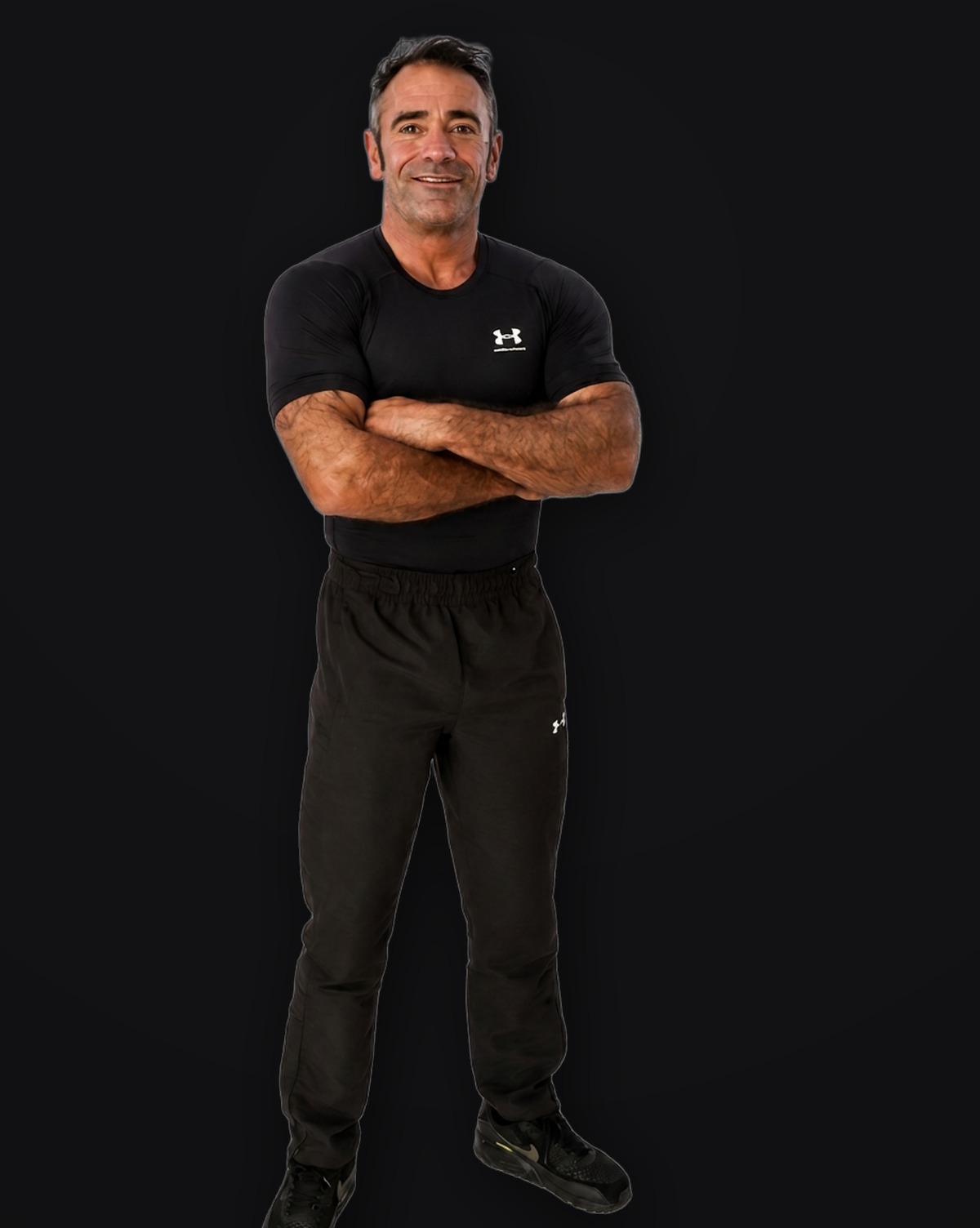
Written by
Wolverine PT
Coaching adults who want to build muscle, get stronger and stay capable while balancing work, family and normal life.